
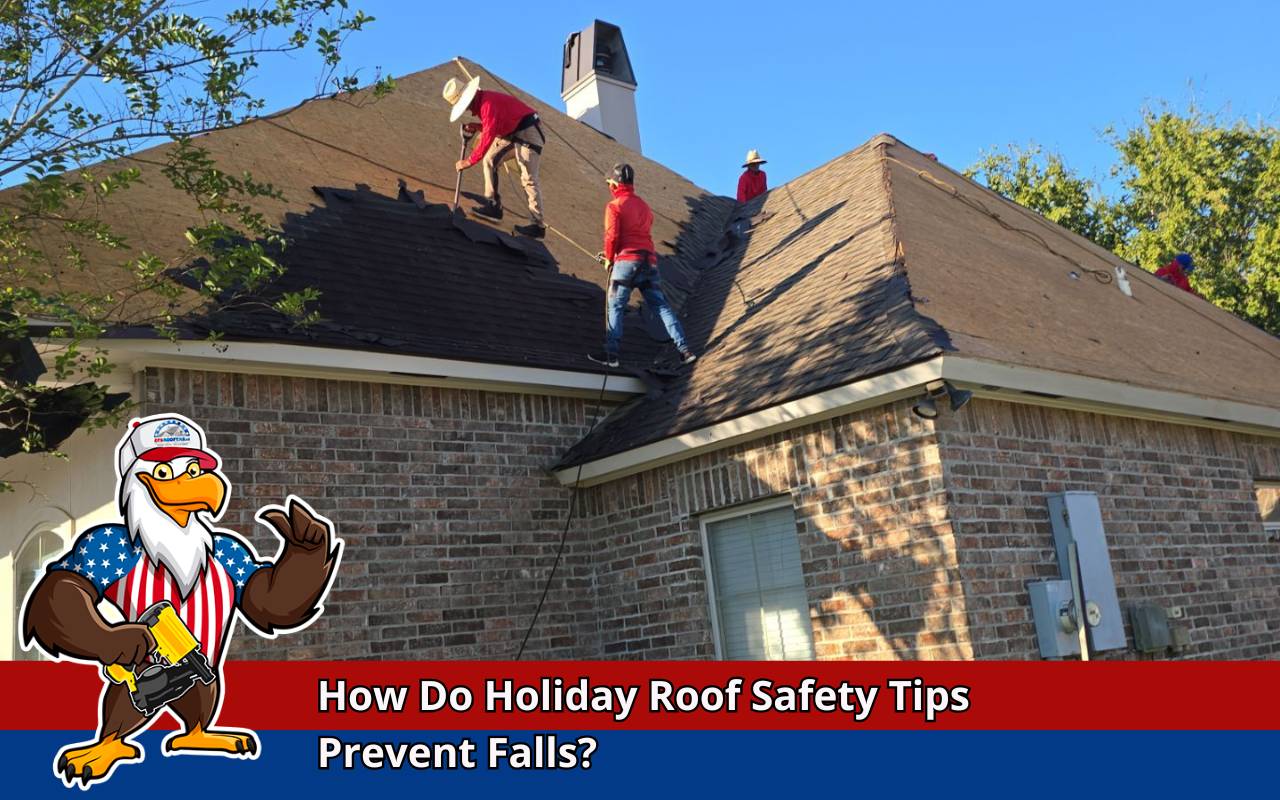
Holiday Roof Safety Tips help you enjoy sparkling lights without a trip to the ER. This guide walks you through safe ladders, roof weight limits, GFCI-protected outlets, and smart use of extension cords. With a few intentional habits, you can protect your family, your roof, and your holiday budget from avoidable accidents while keeping your decorations bright, durable, and code-safe.
How Do Holiday Roof Safety Tips Prevent Falls?
Smart planning is the easiest way to avoid roof falls during the holidays. Check roof weight limits, choose the right ladder, plug lights into GFCI-protected outdoor outlets, secure extension cords, and watch the forecast. With solid footing and a helper on the ground, decorating becomes controlled instead of risky.
Understanding Roof Weight Limits
One of the most overlooked Holiday Roof Safety Tips is understanding how much weight your roof can safely carry. Every roof is engineered for a specific roof load that already includes shingles, sheathing, and, in many climates, snow. Piling on heavy décor without a plan can strain framing, loosen fasteners, and even cause localized sagging.
If your home is older or has visible dips, consult building plans, local codes, or a qualified roofer before adding large displays. Whenever in doubt, choose lighter décor and distribute weight evenly instead of clustering items in one dramatic spot. This protects both your structure and anyone walking on the surface.
- Use lightweight LED décor instead of heavy wooden or metal pieces.
- Spread decorations across several roof sections rather than a single area.
- Avoid anchoring heavy items to weak edges, overhangs, or aging gutters.
- Schedule a checkup using these roof damage prevention tips if you notice cracks, leaks, or sagging.
Choosing the Right Ladder for Roof Decorating
Good ladder safety starts before your feet ever leave the ground. Match the ladder type to your project and height, and be sure its duty rating exceeds your weight plus tools and decorations. Fiberglass is best near power lines because it does not conduct electricity like aluminum.
Set the ladder on firm, level ground at the correct angle. The classic 4:1 rule means placing the base one foot away from the wall for every four feet of height. Extend an extension ladder at least three feet above the roof edge so you can step on and off without stretching.
- Inspect rungs, locks, and feet for damage before each use.
- Maintain three points of contact (two hands and one foot, or two feet and one hand).
- Keep your belt buckle between the rails; never lean or overreach.
- Limit trips by hauling small loads and asking a helper to pass up décor.
Securing Extension Cords and GFCI Protection
Outdoor electrical setups demand more than convenience; they require protection from moisture and overloads. Use only exterior-rated extension cords and plug them into GFCI outlets or portable GFCI adapters, which shut off power quickly if they sense a fault. This simple safeguard dramatically reduces shock risk in wet winter conditions.
Lay cords where no one will trip, and keep all plug connections off the ground and away from gutters that may drain water or melting ice. Avoid running cords through doors or windows, where pinched insulation can expose wiring and create fire hazards.
- Choose cords with proper amperage for your total light load.
- Route cords along walls and fascias, securing them with plastic clips instead of nails or staples.
- Keep connections covered with weather-resistant protectors and out of puddles or snow.
- Replace any cord with cracked, stiff, or frayed insulation immediately.
Checking Weather Conditions Before Decorating
Even the best equipment can become unsafe in poor weather. Wet shingles, morning frost, or light snow dramatically reduce traction and make ladder bases more likely to slide. Strong winds can shift ladders, blow decorations into you, or tangle light strands around feet and hands.
Pick a calm, dry day and avoid working if gusts exceed about 10 miles per hour. If rain, snow, or freezing temperatures are in the forecast within the next 24 hours, postpone your project. Waiting for better weather is far safer than rushing to meet a decorating deadline.
Using Safe Lighting Techniques
Safe lighting is as important as beautiful lighting. Test each strand indoors before you climb, looking for loose bulbs, damaged sockets, or warm spots along the insulation. Choose LED sets whenever possible; they stay cooler, use less power, and reduce the chance of overloading circuits.
Outside, attach lights with plastic clips designed for shingles and gutters instead of metal fasteners. Avoid tight bends and knots that stress wiring, and keep lights slightly away from roofing materials, siding, and dry leaves. Timers or smart plugs help you shut displays off automatically overnight or when you are away from home.
Creating Safe Roof Pathways and Footing
Before you step onto the roof, clear leaves, small branches, and loose granules that can act like ball bearings underfoot. Plan a simple route from the top of the ladder to each area you need to reach, and stick to it instead of wandering across the surface.
Walk slowly, planting your whole foot with each step, and avoid sudden turns. If your roof is steep, consider using a safety harness anchored to a solid structural point or, better yet, stay on the ladder and decorate from the edges only.
Having the Right Footwear and Support
Shoes or boots with rubber soles and good tread are non-negotiable on a roof. Avoid smooth dress shoes, worn-out sneakers, or anything with slick, hard soles. Footwear that supports your ankles reduces the chance of rolling a foot or slipping off the edge of a shingle.
Pair good footwear with common-sense limits. Do not climb if you feel dizzy, tired, or unsteady, and never allow children or pets near the ladder base while you are working. Your stability depends on both your shoes and your ability to focus fully on each step.
Working With a Spotter or Helper
Decorating alone might seem faster, but a second person adds a crucial margin of safety. A helper can steady the ladder, hand you clips and light strands, manage extension cords, and watch for shifting weather or traffic on the ground below.
Before you start, agree on simple signals for “stop,” “step down,” or “I need help.” Keep your phone accessible but avoid using it while you are on the ladder or roof. If at any point your helper feels conditions are unsafe, climb down and reassess together.
Storing Decorations Safely After the Holidays
End-of-season habits shape how safe next year will be. As you take lights down, inspect each strand and cord for cuts, scorch marks, or loose connections. Discard anything questionable rather than trying to repair it with tape or makeshift fixes.
Let everything dry completely before storage, then coil cords loosely and place lights in labeled bins to prevent tangles. Store décor in a cool, dry area off the floor to protect it from moisture. These small routines help prevent surprises that could lead to electrical problems next season.
How to Decorate Your Roof Safely for the Holidays
- Review Holiday Roof Safety Tips and walk around your home to spot hazards such as low branches, uneven ground, or damaged shingles.
- Confirm roof load capacity for large décor and choose lightweight pieces when in doubt.
- Select a ladder with the right height and duty rating, and set it at a safe angle on firm ground.
- Check the weather forecast for a dry, calm day with mild temperatures.
- Test all light strands, then connect them to outdoor-rated extension cords and GFCI-protected outlets.
- Climb carefully with secure footwear, following your planned pathway and working with a helper on the ground.
- After the holidays, remove décor slowly, inspect cords and lights, and store everything neatly for next year.
Frequently Asked Questions
Do I need a roof inspection before hanging decorations?
If your roof is older, recently storm-damaged, or visibly sagging, a professional inspection is a smart first step. A roofer can identify weak spots, advise on safe loading, and recommend repairs. If you are unsure where to start, you can schedule a roof safety inspection with a local specialist.
How can I estimate how much holiday décor my roof can handle?
There is no single number that fits every home. Check building plans, truss labels, or local code requirements, and always err on the lighter side. For bigger displays, combine lighter materials with guidance from resources like this roof prep timeline so you are not loading an unprepared surface.
What should I do if a GFCI keeps tripping when my lights are on?
Frequent tripping often points to moisture in a connection, damaged cords, or too much load on one circuit. Unplug everything and inspect cords and plugs, then reduce the number of strands on that outlet. If the problem continues, contact a licensed electrician before using the setup again.
When is it safer to hire help instead of decorating myself?
Consider professional help if you have a steep roof, three or more stories, mobility or balance challenges, or very large displays. You can focus on designing the look while experienced crews handle the height, ladders, and electrical planning needed to keep everyone safe.
How can I prevent small roof issues from turning into big holiday problems?
Minor leaks, loose shingles, and clogged gutters can all become hazardous when you add weight and foot traffic. Schedule routine maintenance and follow guidance like these preventing roofing issues tips well before the season so your roof is ready long before the first strand of lights goes up.
Celebrating a Safe, Bright Holiday Season
By applying Holiday Roof Safety Tips with patience and preparation, you protect your family, your guests, and your home. Thoughtful choices about ladders, electrical gear, roof load, and timing turn a risky chore into a calm tradition. The reward is a home that shines all season without unwanted emergencies.