
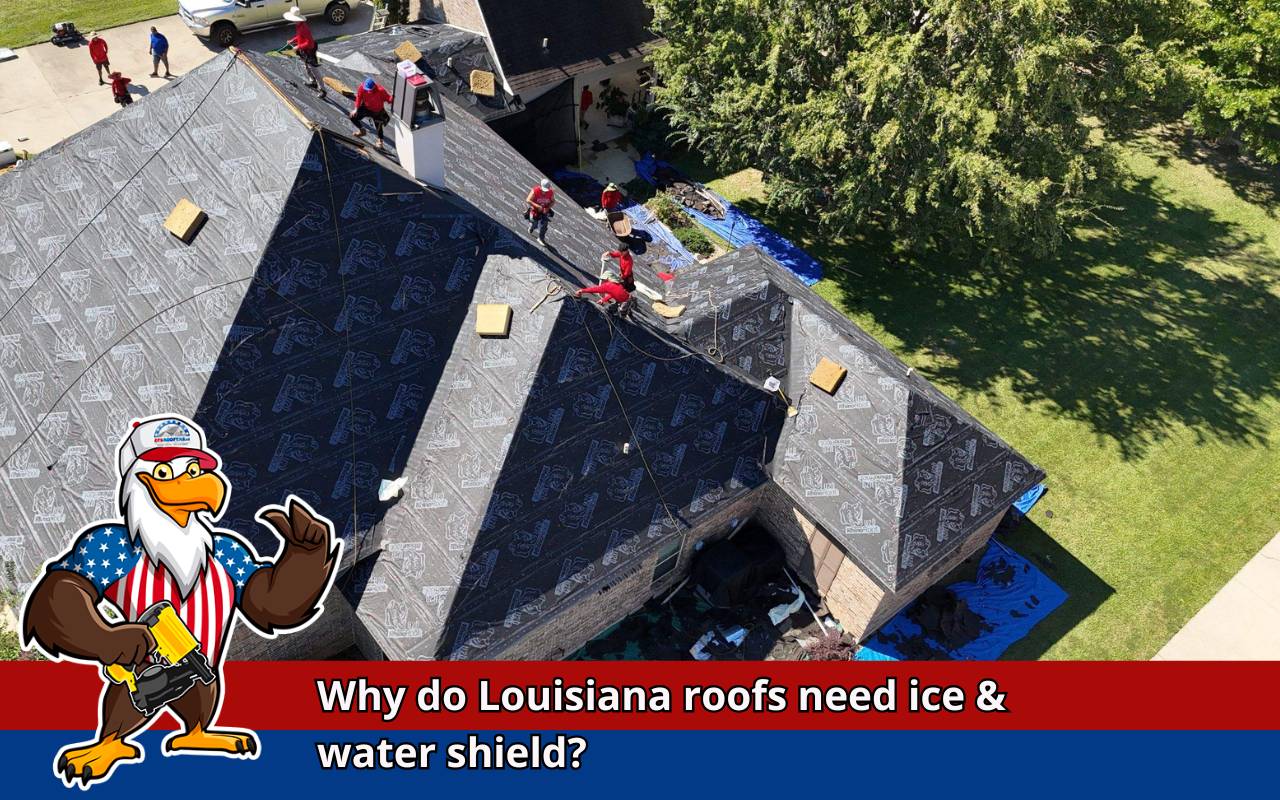
Louisiana homeowners live with blazing heat, sudden downpours, and long hurricane seasons that punish every roof system. Choosing the right layers beneath your shingles matters as much as the shingles themselves. Adding Ice and Water Shield in Louisiana can create a tighter, longer-lasting barrier against leaks, helping protect ceilings, insulation, and framing before storms put your home to the test.
Why do Louisiana roofs need ice & water shield?
Louisiana roofs need an extra moisture barrier because wind-driven rain often sneaks under shingles. Using Ice and Water Shield in Louisiana creates a self-sealing layer over the roof deck, especially at joints and penetrations. It helps stop leaks at their source, reducing costly interior repairs after tropical storms, hurricanes, or days of nonstop rain.
Understanding ice & water shield underlayment
Roofs are more than shingles; they are layered systems. An ice & water shield is a self-adhered underlayment that bonds directly to the roof deck and seals around nail holes. This membrane forms a continuous waterproof barrier in high-risk areas, supporting the primary underlayment so wind-driven rain cannot easily reach wood sheathing.
- Self-sealing around fasteners to block hidden water paths.
- Fully adhered to resist uplift from strong coastal winds common in Louisiana.
- Compatible with asphalt shingles and many metal roofing systems.
- Targeted protection for problem zones instead of the entire deck when budget is tight.
Louisiana weather challenges for your roof
Louisiana’s climate brings extreme humidity, high UV exposure, and sudden cloudbursts that overwhelm gutters and flashing. Hurricanes and tropical storms drive rain sideways, forcing water beneath shingles and across underlayment. These conditions make roof leaks more likely at joints, fasteners, and transitions, especially on older roofs that have already expanded and contracted through years of hot seasons.
- Blazing heat that accelerates shingle aging and dries out sealant lines.
- Soaking rains that test every seam, especially where roof planes meet.
- Storm-force winds that lift shingles and expose vulnerable decking.
- Repeated storm seasons where adding Ice and Water Shield in Louisiana helps roofs bounce back with fewer repairs.
Pairing a quality underlayment with hurricane preparation steps—such as those in a hurricane roof prep checklist—reduces the odds of surprise leaks after a major storm.
Benefits for valleys and eaves
Roof valleys and eaves handle the heaviest water flow, so even tiny gaps can turn into leaks. Installing Ice and Water Shield in Louisiana at these locations adds focused protection where it matters most. The membrane bonds tightly to the deck and flashing, helping keep runoff out of your attic and away from wall cavities.
- Valleys: Channel intense runoff safely without relying only on overlapping shingles.
- Eaves: Guard the lower edge of the roof where water and wind pressure are highest.
- Transitions: Support flashing around dormers, sidewalls, and skylights.
- Storm upgrades: When paired with stormproofing your roof, it contributes to a more resilient system.
Frequently Asked Questions
Is an ice & water shield required by Louisiana building codes?
Code requirements vary by parish and roof design. Many jurisdictions require enhanced underlayment or self-adhered membranes in vulnerable areas like valleys and eaves. Because local inspectors interpret rules differently, it’s wise to discuss specific code considerations with your roofer and verify details with your local building department before work begins.
Will this membrane replace my standard underlayment?
No. An ice & water shield is typically used in addition to standard synthetic or felt underlayment. Underlayment covers most of the deck, while the self-adhered membrane protects high-risk zones such as valleys, eaves, and penetrations. Together, they form a layered system that is far more reliable during severe weather.
Can I add an ice & water shield to an existing roof?
In most cases, the membrane is installed during a re-roof or new construction. To install it correctly, shingles must be removed so the shield can adhere directly to the deck. If you suspect hidden water damage, scheduling a professional inspection is the safest way to decide whether a partial tear-off or full replacement makes sense.
How do I know if my home really needs this extra protection?
Homes with complex roofs, shallow pitches, tree coverage, or past leak history benefit most from added membrane protection. If you live in a hurricane-prone area or near the coast, treat an upgraded underlayment system as essential rather than optional. A trusted local contractor can evaluate risk zones and recommend the right coverage.
Who should I contact to plan a roof upgrade in Louisiana?
If you are considering a roof replacement or storm-resistant upgrade, connect with a local specialist who understands regional weather and codes. You can request a Louisiana roof inspection to review leak history, decking condition, and upgrade options before the next storm season arrives.
How to add ice & water shield to a Louisiana roof
Proper installation is just as important as choosing the right product. A step-by-step approach keeps the membrane flat, bonded, and ready for storm season.
- Schedule a roof evaluation with a contractor experienced installing Ice and Water Shield in Louisiana to assess decking, slope, and weak points.
- Remove old materials, exposing clean, dry wood so the self-adhered membrane can bond securely without bubbles or debris.
- Apply starter courses along eaves, extending past the warm wall line, then continue through valleys and around penetrations.
- Overlap seams correctly, following manufacturer guidelines so each course sheds water onto the layer below.
- Install primary underlayment and shingles over the membrane, ensuring flashing components tie into the system without exposed gaps.
Cost, code considerations, and long-term value
Adding a self-adhered membrane increases upfront roof costs, but it can significantly reduce long-term expenses from ceiling stains, damaged insulation, and recurrent leak repairs. Many insurers and inspectors look favorably on enhanced moisture protection and robust roof anchoring methods, especially in hurricane-prone regions. The added durability often offsets the initial cost over the roof’s lifespan.
Protecting your Louisiana home from roof leaks
Choosing Ice and Water Shield in Louisiana is ultimately about peace of mind. By reinforcing valleys, eaves, and other weak points, you give your roof a better chance of staying watertight through hurricane season and everyday storms. When combined with regular inspections and timely maintenance, this upgrade can extend roof life and safeguard your home’s interior comfort.
References
- Louisiana roofers urge inspections after snow, ice – WDSU News report on how melting ice and standing water can damage roofs and why inspections matter after winter weather.
- Ice and Water Shield For Roofs: A Complete Guide – Today’s Homeowner article explaining how ice and water shields work as roofing underlayment to prevent leaks in vulnerable areas.