
Roof valleys handle the highest volume of runoff on a sloped roof, so small installation mistakes can become big water problems. This guide explains how to spot valley trouble, clear debris, check underlayment, and secure flashing before damage spreads. You’ll also learn when an ice/water shield matters and when to call a roofer for faster, safer repairs in your home.
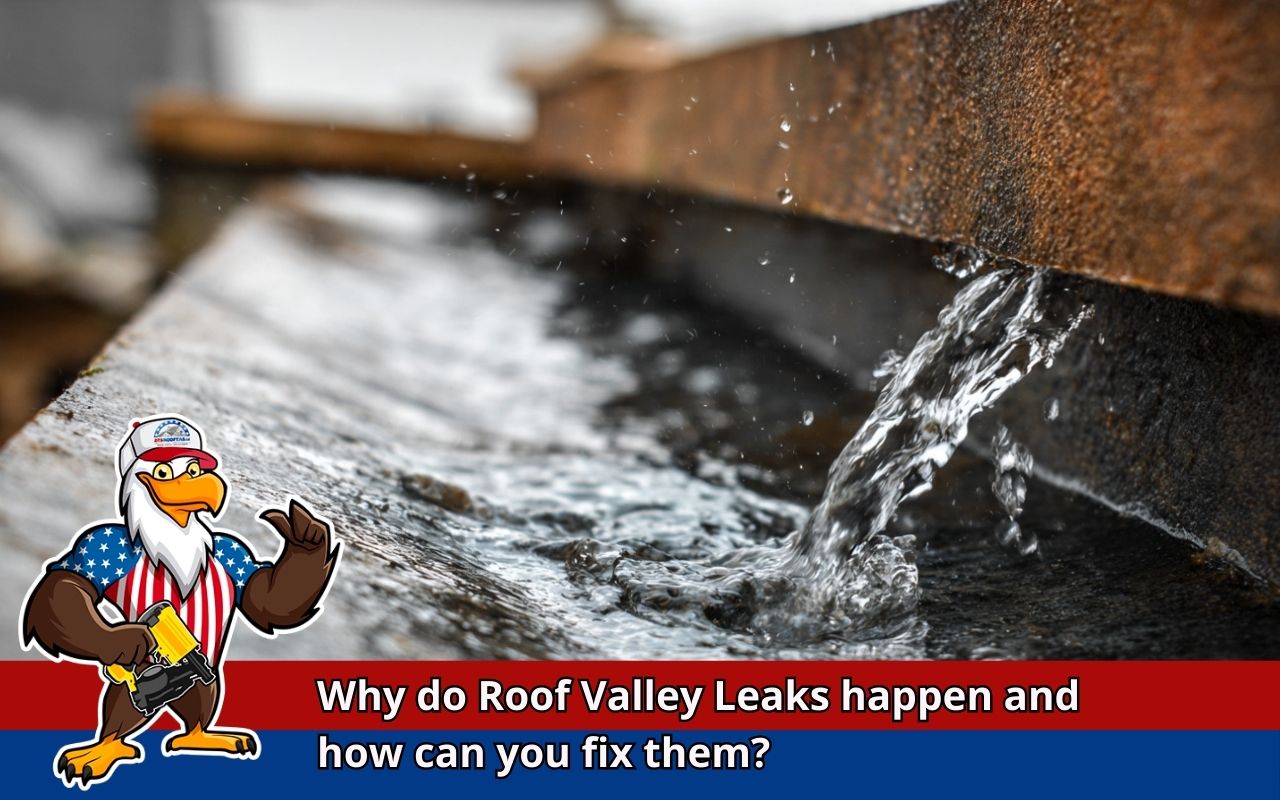
Why do Roof Valley Leaks happen and how can you fix them?
Roof valley leaks happen when concentrated runoff finds gaps in shingles, underlayment, or metal flashing—often after debris buildup, wind-driven rain, or aging materials. Fixing them means cleaning the valley, replacing damaged underlayment, re-securing or replacing flashing, and sealing edges correctly. If decking is soft or leaks persist, schedule a professional inspection.
Understanding how a roof valley manages water
A roof valley is the channel where two roof slopes meet. Because it handles the most water flow, it’s a high-stress area for shingles and fasteners. When water can’t drain cleanly—or protective layers weren’t installed correctly—moisture can slip beneath roofing materials and show up as stains, damp insulation, or dripping in the attic.
Key idea: Valleys don’t fail because they exist—they fail because water concentrates there, and small defects become big fast.
Fast warning signs to check after rain
- Brown ceiling stains or bubbling paint near an exterior wall
- Wet insulation or dark wood in the attic below the valley line
- Granules collecting in gutters (faster shingle wear)
- Shingles that look lifted, cracked, or thin along the valley edges
- Dripping sounds during storms or for hours afterward
If you’re trying to catch issues early, compare your findings with Smart Solutions for Effective Early Leak Detection and Discover the Early Warning Signs of Roof Failure You Shouldn’t Ignore.
Most common causes in the valley area
- Underlayment breakdown: tears, wrinkles, or nail holes that widened over time.
- Flashing problems: missing metal, corrosion, poor overlap, or fasteners placed too close to the centerline.
- Debris buildup: leaves and shingle grit trap water and force it sideways under shingles.
- Ice/water shield gaps: missing membrane coverage in vulnerable zones or seams that weren’t rolled down firmly.
- Bad shingle cuts: crooked valley lines or exposed nails create direct entry points.
Quick rule: If water can’t flow freely down the valley, it will look for a way in.
Tools and materials that make repairs safer
- Stable ladder, non-slip shoes, gloves, and eye protection
- Flat bar/pry bar, hammer, roofing nails, utility knife
- Replacement shingles, matching underlayment, and valley flashing
- Roofing cement or roof sealant (for edges and minor sealing)
- Ice/water shield membrane (for added waterproofing in valleys)
Safety note: If the roof is steep, wet, or visibly soft underfoot, treat it as a professional repair—not a weekend project.
How to repair a valley leak step by step
- Clear the valley: Remove leaves and debris gently with a soft broom or low-power blower from top to bottom.
- Inspect shingles and nail lines: Look for lifted tabs, cracks, exposed fasteners, or worn spots along the valley edges.
- Lift shingles carefully: Use a flat bar to loosen nails without snapping shingles you plan to reuse.
- Replace damaged underlayment: Cut out the compromised section and extend the new layer beyond the weak area for continuous coverage.
- Install or reset flashing: Center valley flashing, confirm proper overlap, and keep fasteners out of the valley’s main water path.
- Add ice/water shield where needed: Apply to a clean, dry surface; press firmly and overlap seams for a watertight bond.
- Re-shingle and seal edges: Reinstall shingles with clean cuts and seal only where appropriate—never “glue” the entire valley shut.
- Test the repair: Run a hose from the top of the valley downward while someone checks the attic for moisture.
Frequently Asked Questions
Can I fix Roof Valley Leaks without replacing the whole roof?
Often, yes. If the issue is limited to damaged underlayment, failed flashing, or debris-related overflow, a targeted valley repair may solve it without a full replacement. The key is confirming the decking is solid and the leak hasn’t spread beyond the valley.
How do I know if the flashing is the real problem?
Clues include rust, gaps, lifted edges, or nails too close to the centerline. If leaking happens mainly during wind-driven rain, flashing overlap or edge sealing is frequently the culprit. A roof inspection can verify whether the metal needs re-fastening or replacement.
Is ice/water shield worth adding in a valley?
In many homes, it’s a smart upgrade because valleys concentrate water and can experience backup during extreme weather. Ice/water shield also self-seals around fasteners, which helps reduce risk when rain pushes under shingles.
When should I stop DIY and hire a roofer?
Stop if you see soft decking, widespread staining, recurring leaks, steep slopes, or multiple entry points. For a professional repair path and next steps, review Baton Rouge Guide to Roof Leak Repair Prices and Storm Damage.
Can I schedule an inspection if I suspect a valley leak?
Yes—especially if the leak appears after storms or you’ve noticed interior staining. To request a roof check and recommended repair scope, use Contact.
Maintenance that prevents repeat valley problems
Most valley issues are avoidable with simple habits. Clean valleys after heavy storms, keep gutters flowing, and trim branches that drop debris. After seasonal weather shifts, inspect the attic for moisture and look for shingle wear at the valley line. Preventive checks are cheaper than structural repairs.
References
Ice and Water Shield For Roofs: A Complete Guide