
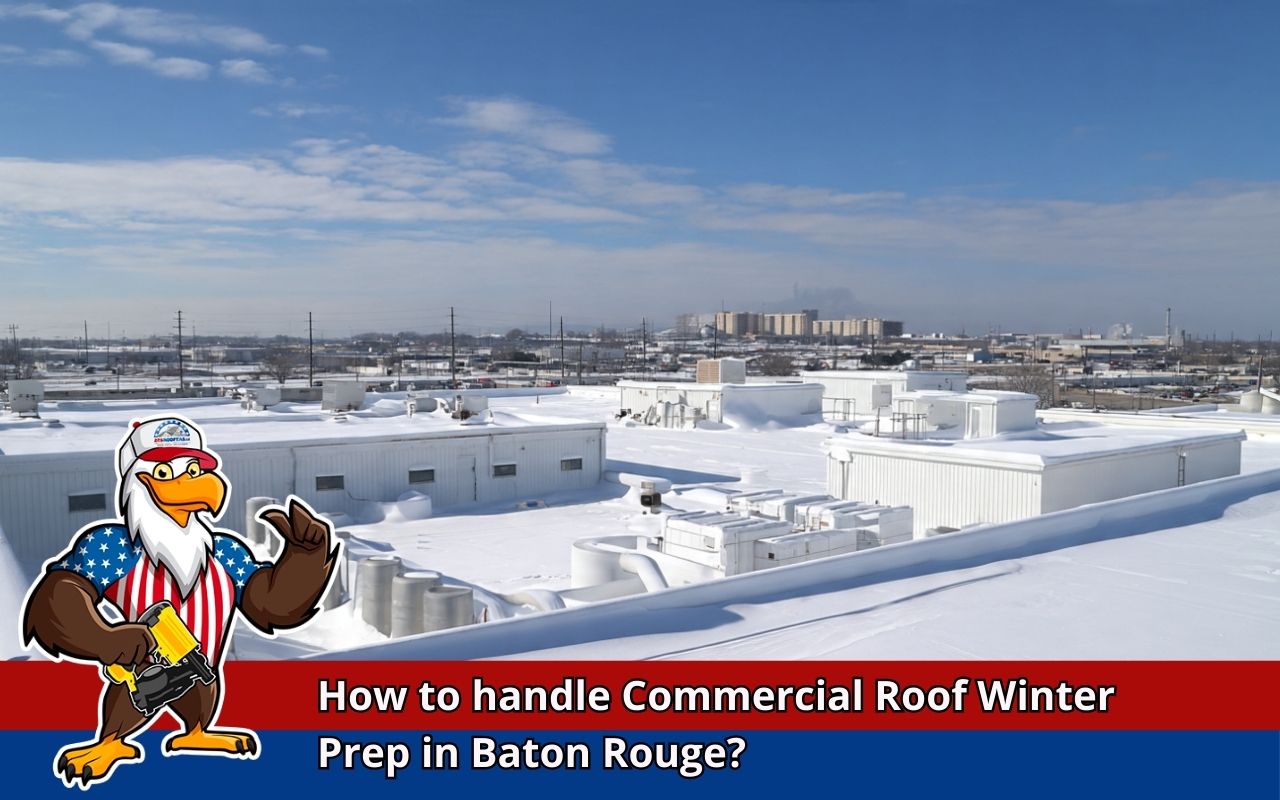
Winter in Baton Rouge is usually mild, yet cold snaps and rain still stress low-slope systems. Commercial Roof Winter Prep in Baton Rouge helps prevent leaks, slip hazards, and emergency shutdowns. By checking drainage, roof penetrations, and traffic areas early, you reduce repairs, protect interiors, and keep operations steady through the season so your building stays dry and safe today.
How to handle Commercial Roof Winter Prep in Baton Rouge?
Start early with a focused roof walkthrough and fast repairs. Even brief freezes can turn small gaps into leaks. Prioritize water flow, flashing, and rooftop traffic zones. Then document what you find, fix issues promptly, and repeat checks after major storms. This approach limits downtime and protects the people and equipment inside your building.
Why winter roof prep matters locally
Baton Rouge winters bring quick temperature swings, wind-driven rain, and occasional ice. As a result, small weaknesses can grow fast. Therefore, a pre-winter plan protects your roof system and helps your business avoid surprise disruptions.
- Leak prevention: Cold-weather movement can open seams and flashing edges.
- Safer access: Slippery surfaces increase fall risk during service visits.
- Lower emergency costs: Scheduled work is usually simpler than after-hours repairs.
- Better energy control: Seals and insulation stay effective when moisture stays out.
What to inspect before the first cold front
Use a consistent checklist so nothing gets missed. Then record photos and locations so repairs stay organized. If you want a pre-storm baseline, review your notes alongside Pre-Storm Roof Inspection.
- HVAC curbs: Check sealant cracks, loose metal, and open corners around units.
- Drains: Clear debris, verify strainers, and confirm water exits quickly.
- Walk pads: Replace loose sections and clean surfaces to reduce slips.
- Inspection plans: Schedule one visit before winter and one mid-season check.
- Roof edges and flashing: Look for lifted terminations, missing fasteners, and gaps.
Maintenance moves that reduce winter risk
Once you spot issues, act quickly. Next, strengthen vulnerable areas before the next weather shift. For added storm resilience, consider methods outlined in Stormproofing Roof and Roof Anchoring Methods.
- Re-seal penetrations: Refresh failing sealant at pipes, vents, and curb transitions.
- Restore drainage paths: Remove leaf buildup and confirm scuppers and gutters flow freely.
- Repair membrane damage: Patch punctures now, because cold can worsen brittle materials.
- Reduce ponding: Address low spots that hold water after rain.
- Improve rooftop safety: Mark paths and limit nonessential foot traffic during freezes.
How-to: Build a 30-minute winter prep walkthrough
- Start at access points and scan for trip hazards and loose materials.
- Walk perimeter edges and check flashing terminations for gaps or lift.
- Inspect penetrations and re-check sealant condition around all rooftop equipment.
- Test drainage by running water and watching for fast, smooth flow.
- Photograph issues, note locations, and prioritize repairs by risk and urgency.
- Recheck after the next heavy rain or wind event to confirm performance.
Frequently Asked Questions
When should I schedule a winter roof inspection for my building?
Book it 2–4 weeks before the coldest stretch and recheck mid-season. If you want help coordinating a site visit, use Contact our team to request a date that fits your operations.
What’s the biggest winter risk for flat commercial roofs in Baton Rouge?
Slow drainage and hidden moisture entry are the most common triggers. Because rainfall is frequent, water that lingers can find seams, edges, or weak flashing and then spread inside.
Can my maintenance staff handle winter prep, or do I need a roofer?
Basic clearing and documentation can be handled in-house, but repairs should be evaluated by a pro. If you see membrane damage, loose flashing, or recurring ponding, a commercial roofer can confirm the right fix.
How do I reduce slip risk on the roof during cold mornings?
Limit access, keep walk paths clean, and avoid harsh chemicals on membranes. Use non-abrasive options only where approved, and postpone nonurgent rooftop work when surfaces are slick.
What should I do if I find a leak during winter weather?
Contain interior water first, then document the roof area and call for repairs. Quick containment protects equipment and ceilings. Afterward, a targeted repair plan prevents repeat leaks.
When to call a commercial roofer
If you notice recurring ponding, interior staining, lifted flashing, or repeated wet insulation, it is time to bring in a specialist. Also, if your team cannot safely access the roof, professional support reduces risk. Commercial Roof Winter Prep in Baton Rouge is most effective when small repairs are completed before the next storm cycle.