
Winter in Prairieville brings cold rain, freezing nights, and surprise storms that can punish neglected gutters. Planning Winter Gutter Maintenance in Prairieville before temperatures drop protects siding, fascia, and foundations. With a clear seasonal checklist, you keep water flowing, prevent fascia rot and leaks, and head into winter confident your home is protected from ice dams, overflow, and hidden damage.
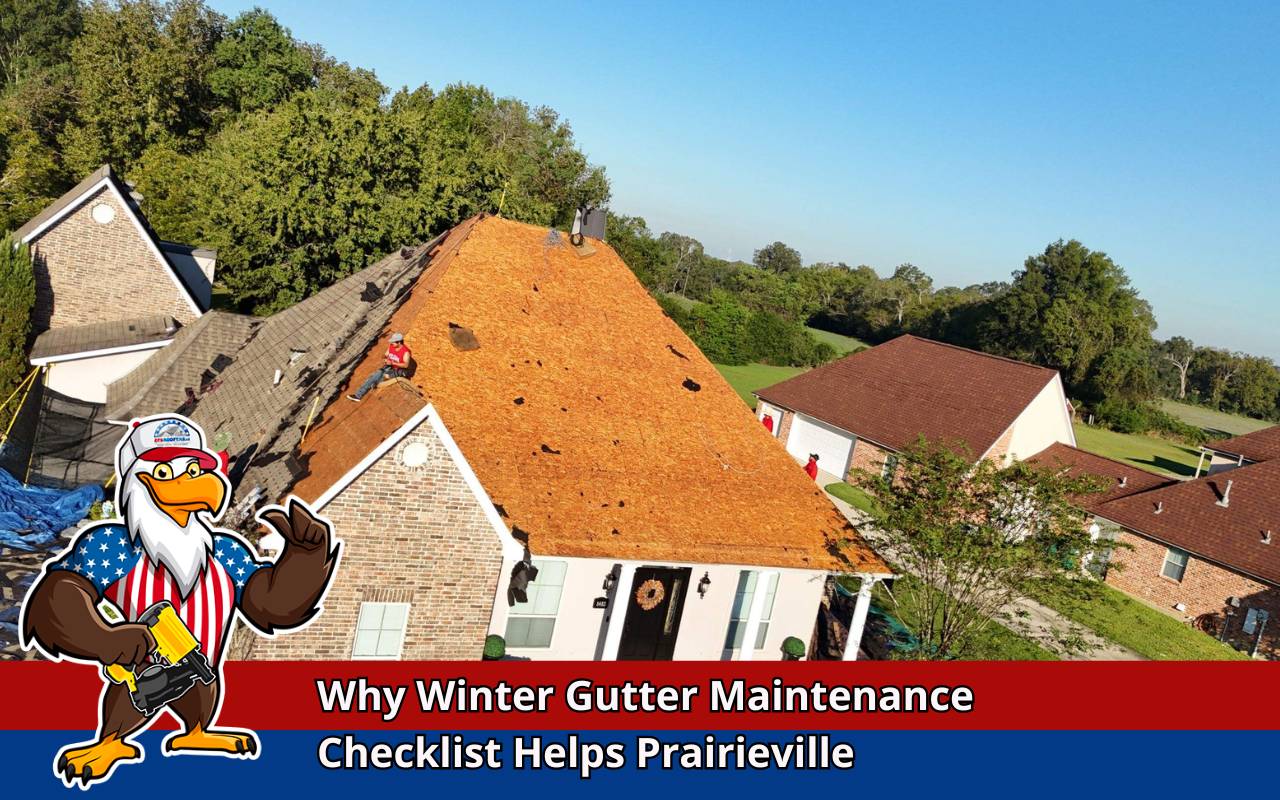
Why Winter Gutter Maintenance Checklist Helps Prairieville
Winter gutter care keeps meltwater and rain moving away from your roof, siding, and foundation. A focused checklist for Prairieville reduces ice dams, fascia rot, and leaks around downspouts. By preparing early, you extend gutter life, protect indoor comfort, and avoid urgent repairs during the coldest, wettest days.
Importance of Winter Gutter Maintenance in Prairieville
Maintain your gutters before the first cold snap so water can drain freely instead of freezing at the roof edge. When runoff cannot move, it backs up under shingles, leading to leaks, warped soffits, and costly fascia rot. Heavy icicles may also fall, creating hazards for family members and pets.
Consistent Winter Gutter Maintenance in Prairieville helps you:
- Keep steady water flow away from siding, windows, and foundations.
- Prevent fascia rot and staining from trapped moisture.
- Avoid ice dams that push water beneath shingles and into ceilings.
- Reduce erosion and pooling that can reach basements or crawl spaces.
- Limit insect and pest activity in damp, clogged gutters.
Regular gutter cleaning and inspections are far cheaper than repairing damaged framing, insulation, or interior finishes caused by repeated winter leaks.
Inspecting Gutters for Debris Build-up
Begin from the ground using binoculars or your phone’s zoom to scan for leaves, pine needles, and roof grit. Look for low spots where gutters appear to sag or hold standing water. Any dark streaks on siding below may signal repeat overflow during storms.
- Check corners and joints, where debris tends to collect first.
- Note areas above large trees that drop leaves or needles.
- Mark sections with visible sagging for bracket repairs later.
- Pay special attention to sections just before downspouts.
Document problem sections after each storm. If certain runs clog repeatedly, consider adding gutter guards or adjusting nearby tree branches to reduce debris.
Clearing Ice Dams Safely and Effectively
Ice dams form when roof snow melts, flows to the cold eave, and refreezes in the gutter. Instead of climbing onto the roof, work from the ground when possible and avoid standing directly beneath heavy ice formations.
- Use a roof rake to pull loose snow off the roof edge in shallow passes.
- Keep the rake angled away from shingles to avoid granule loss or damage.
- Apply gutter-safe ice-melt products along the gutter and into downspout openings.
- Allow time for melting, then gently move slush toward outlets with a soft broom.
- Repeat until water runs freely and large ice chunks are gone.
Never strike gutters with metal tools; dents and cracked seams invite leaks once temperatures rise again.
Checking for Leaks and Damaged Seals
Choose a mild day and run a garden hose into the gutter, starting near the highest point. Watch joints, end caps, and fasteners for drips or small streams. Any moisture escaping from seams indicates worn sealant or loose hardware that needs attention.
Once surfaces dry, reseal leaky joints with exterior-grade sealant and replace brittle or flattened rubber gaskets. Tighten screws and hangers to keep channels rigid. A watertight gutter system keeps water flow controlled, protecting fascia boards and roof edges from repeated wetting and eventual decay.
If you already see ceiling stains, peeling paint, or warped trim, review these issues alongside dedicated resources on signs of roof water damage so hidden problems don’t escalate.
Ensuring Downspouts are Free of Blockages
Downspouts do the heavy lifting once water leaves the gutter. Run water through the system and observe each outlet. If flow is weak or backs up, a clog is forming inside the elbow or vertical run.
- Clear visible leaves or nests from the top and bottom openings.
- Use a plumber’s snake or high-pressure nozzle to break up internal clogs.
- Confirm that water discharges at least three feet away from the foundation.
- Add extensions or splash blocks where pooling occurs near the home.
When downspouts stay open, meltwater and heavy winter rain can move quickly away from your home, lowering the risk of foundation cracks, damp crawl spaces, and icy sidewalks.
Installing Gutter Guards for Added Protection
Gutter guards reduce the amount of gutter cleaning required by keeping large debris out while still allowing steady water flow. For Prairieville’s winter weather, choose guards rated for snow load, with sturdy materials that will not warp under ice weight.
Popular options include:
- Mesh screens that block leaves while handling high water volume.
- Foam inserts that sit inside the gutter and filter water through.
- Solid covers that use surface tension to pull water into a narrow slot.
Install guards according to the manufacturer’s instructions so they sit flush and do not lift shingles. For older systems, pairing new guards with professional gutter installation in Prairieville can correct pitch issues and extend system life.
Repairing Sagging or Misaligned Gutters
Sagging gutters collect standing water that quickly freezes during cold nights. From the ground, look for low points or sections pulling away from the fascia. Inside the gutter, ponding water is a clear sign that the slope no longer directs water toward downspouts.
Use a level to verify the correct fall, usually about a quarter-inch drop for every ten feet. Replace corroded hangers with new, heavy-duty brackets and anchor them into solid framing. Realigning long runs now helps prevent structural damage and future fascia rot caused by trapped ice and overflowing water.
Protecting Gutters from Snow and Ice Accumulation
After each significant snowfall, use a roof rake to remove shallow layers along eaves and gutters. Frequent, light clearing is safer than waiting until deep drifts freeze solid. Take your time and work in small sections to avoid bending metal or loosening fasteners.
In areas prone to refreezing, some homeowners install heated cables along gutters and downspouts. These systems must be used sparingly and according to the manufacturer’s guidelines. Their goal is simple: keep pathways open so water flow never stops, even during freeze–thaw cycles.
DIY vs. Professional Gutter Maintenance
Handling basic winter prep yourself can save money and help you spot early issues. With a stable ladder, gloves, and a scoop, many homeowners feel comfortable tackling routine gutter cleaning and visual inspections on single-story sections.
For taller homes, complex rooflines, or persistent leaks, a professional visit is usually safer and more thorough. Trained crews bring harnesses, stabilizers, and diagnostic experience to find subtle sagging, hidden seal failures, and early fascia rot. If Winter Gutter Maintenance in Prairieville feels overwhelming or unsafe, you can always request a winter gutter inspection and let experts handle the heavy work.
Winter Gutter Maintenance Tips for a Safe and Secure Home
Think of your gutters as part of your home’s overall winter defense. Combine seasonal gutter work with roof checkups so your entire system moves water efficiently. Reviewing trusted routine roof care tips can help you build a simple annual schedule that pairs gutter cleaning with roof inspections.
Key winter gutter safety tips include:
- Schedule debris removal before repeated freezes and heavy rain.
- Inspect seals, brackets, and downspouts after major storms.
- Address small leaks quickly to prevent fascia rot and interior damage.
- Use fall protection and ladder stabilizers whenever working at height.
- Call professionals for steep roofs, high gutters, or recurring water issues.
By treating Winter Gutter Maintenance in Prairieville as a yearly habit rather than a one-time chore, you protect both your home’s structure and your peace of mind.
Frequently Asked Questions
How often should I schedule winter gutter cleaning in Prairieville?
Most homes benefit from cleaning in late fall and again mid-winter if trees are nearby. If you notice overflow, sagging, or slow downspouts after storms, move up your schedule or request a winter gutter inspection sooner.
What are the first signs that my gutters are causing fascia rot?
Watch for peeling paint, dark streaks under the gutter line, soft or crumbly wood, and musty odors near exterior walls. Indoors, ceiling stains near exterior edges may also signal that gutters are overflowing and soaking the fascia behind them.
When should I call a professional instead of doing gutter work myself?
Hire a pro if your roof is steep, your gutters are more than one story high, ice dams are recurring, or you feel unsteady on ladders. Persistent leaks, sagging sections, or visible water inside the home also justify a professional inspection.
Can new gutters really improve winter water flow around my home?
Yes. Properly sized and installed gutters with well-placed downspouts handle heavy winter rain and snowmelt more effectively. If your system is undersized, damaged, or poorly sloped, upgrading through professional gutter installation in Prairieville can dramatically improve drainage.
How do gutter guards affect winter gutter maintenance costs?
Quality gutter guards reduce the frequency of gutter cleaning by blocking large debris, which helps maintain water flow and lowers long-term maintenance costs. You will still need periodic inspections to remove fine buildup, but winter prep usually becomes faster and safer.
How to Perform Winter Gutter Maintenance in Prairieville
- Inspect gutters, fascia, and downspouts from the ground after each major storm.
- Schedule gutter cleaning before regular freezing nights begin.
- Flush gutters with a hose to check water flow and locate hidden leaks.
- Seal joints, tighten hangers, and correct sagging runs to restore proper pitch.
- Clear snow from roof edges and treat ice dams with gutter-safe ice melt.
- Upgrade to guards or new sections where wear, corrosion, or repeated clogs appear.
- Contact a trusted local roofer if you see interior stains or structural concerns.
References
- 10 Tips to Get Your House Ready for Winter – Consumer Reports.
- How Often Do You Really Need To Clean Your Gutters? – Southern Living.